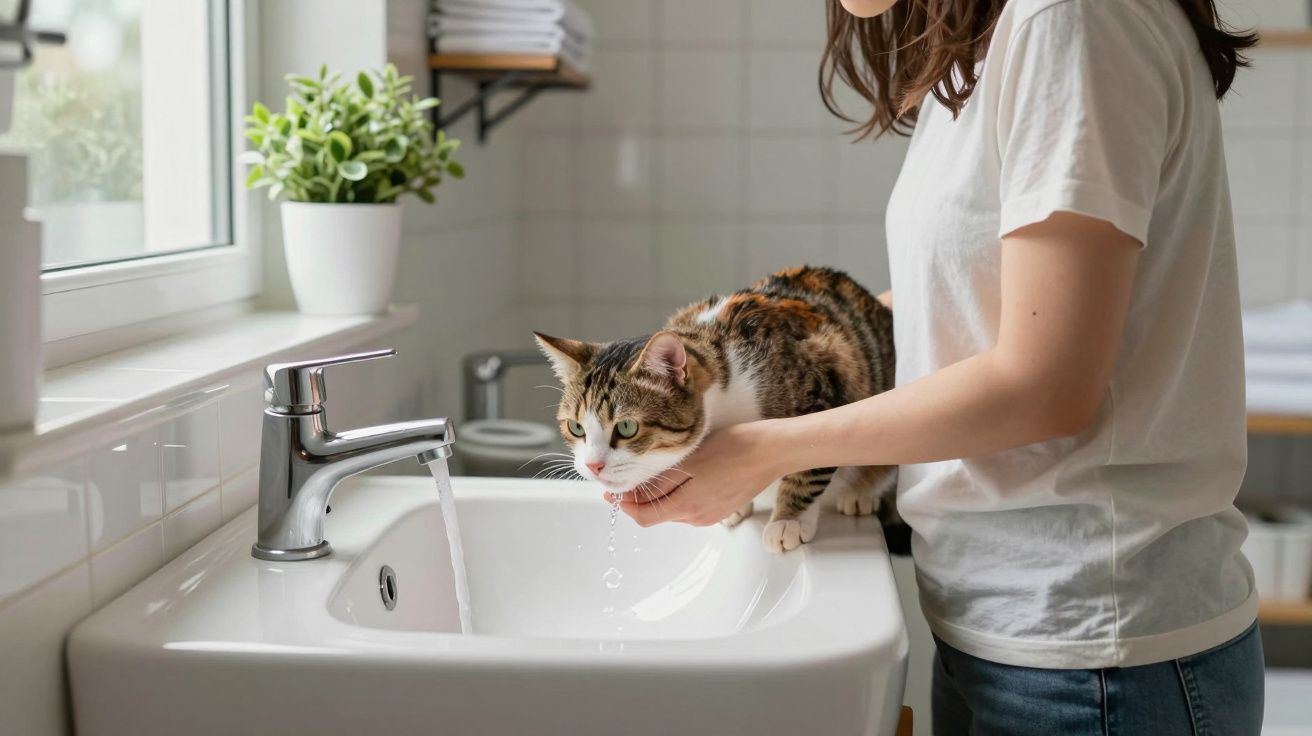
You turn on the bathroom tap for thirty seconds and within ten, there’s a small furry face shoved under the stream, tongue flicking like a tiny piston. The crystal‑clean glass bowl you just filled? Utterly ignored. Somehow, the dripping bath tap or kitchen sink is the place to drink.
It’s funny – until you notice your cat is at the tap a lot. Are they just being dramatic, or is your “little gremlin from the plumbing department” trying to tell you something about their health or home?
Behaviourists and vets say both can be true. A cat who loves the tap is often perfectly normal – but the pattern around that behaviour is what matters.
Why cats are weirdly obsessed with running water
Most behaviourists start in the same place: your cat’s ancestors didn’t have ceramic bowls and filtered fountains. They had puddles, streams and whatever they could find.
Running water usually meant “safer” in the wild – less likely to be stagnant, contaminated or full of parasites. That bias hasn’t gone anywhere.
To a cat’s brain, a trickling tap often looks and sounds like fresher water than the silent bowl on the floor.
Several small instincts line up at once:
- Movement grabs attention. Cats’ eyes and ears are tuned to detect tiny motions and sounds. A drip is literally designed to be irresistible.
- It probably smells and tastes different. Water that’s sitting in a plastic bowl for hours can pick up odours from detergent, food and the bowl itself. Tap water feels “new”.
- It’s cooler and more oxygenated. Flowing water is often a degree or two colder, which many cats prefer, especially in warm rooms or for long‑haired breeds.
Very quickly, a harmless curiosity becomes a habit: tap goes on, cat appears. It’s a learned routine layered on top of old wiring.
Bowl drama: whiskers, placement and other subtle turn‑offs
A lot of cats who adore the tap are actually telling you they hate something about their bowl setup, not about still water in general.
Behaviourists routinely flag the same culprits:
- Whisker stress. Narrow or deep bowls press on sensitive whiskers as your cat drinks. That can feel mildly irritating, so they prefer a place where their face can spread naturally – like a sink or a falling stream.
- Bowl placement. Water bowls pushed into a corner, next to the litter tray or right by the food can put some cats off. In the wild, water and food sources aren’t always together; many felines instinctively prefer separation.
- Smell and cleanliness. Cats have a strong sense of smell. A bowl that looks fine to you can smell “old” to them, especially if it’s near the dishwasher, bin or strong cleaning products.
- Material. Plastic can hold odours and tiny scratches where bacteria sit. Stainless steel or ceramic tends to be calmer on a cat’s nose and tongue.
Try a simple experiment for a week:
Keep one tap‑drinking session as a treat, but quietly upgrade the bowl: wide, low, ceramic or stainless steel, placed away from food and litter, topped up with fresh, cool water twice a day.
If your cat starts using the bowl more, they weren’t “fussy” – they were negotiating with bad design.
Is it thirst, play, or attention?
Not every cat at the tap is actually thirsty. Behaviourists break tap love into a few broad motives.
1. Genuine preference for running water
Some cats simply like the feel and sound of a flow. They’ll:
- Lap carefully from the stream.
- Ignore the trickling water itself once they’ve had enough.
- Return at fairly predictable times (after meals, play or in the evening).
These cats often do well with a quiet water fountain at home – they get the running water experience without needing a human on hand.
2. Play and sensory stimulation
You’ll see paw batting, splashing, trying to catch droplets, even drinking from a wet paw rather than directly from the stream. That’s less “I’m parched” and more “this is my favourite toy.”
This can be a sign your cat wants:
- More interactive play (wand toys, chase games).
- More vertical space and variety.
- Safe chances to explore water and textures.
3. Learned attention‑seeking
If every tap visit triggers a conversation, a laugh, a video, a treat or a cuddle, your cat has trained you.
They may start meowing by the sink, pawing at the tap or sitting on the basin staring at you. In behaviour terms, the tap has become a predictable way to summon their human, especially in the morning or evening.
None of these are worrying in themselves. What matters is whether the amount of drinking or the pattern changes.
Normal quirk or health red flag?
Here’s how behaviourists and vets roughly separate “typical tap goblin” from “book a check‑up”.
| Pattern | Likely normal | Time to call the vet |
|---|---|---|
| Tap visits | A few playful or routine visits a day, consistent over months | Sudden increase in frequency or urgency over days–weeks |
| Other water sources | Drinks from bowls/fountain too, especially if fresh | Only wants tap, seems restless if it’s off |
| General behaviour | Usual energy, appetite, weight, litter habits | Any changes in weight, appetite, urination or mood |
The sudden part matters. A cat who has adored the tap since kittenhood is different from a 10‑year‑old who has just started haunting the bathroom sink and draining bowls overnight.
Conditions vets worry about when thirst ramps up
If your cat is drinking or weeing noticeably more than usual – tap, bowl or puddle – vets think about:
- Kidney disease
- Diabetes
- Hyperthyroidism (overactive thyroid)
- Urinary tract issues
These don’t appear just as tap fascination; they come with a wider shift:
- Heavier or more frequent pees in the litter tray (or accidents).
- Weight loss despite eating, or a big change in appetite.
- Vomiting, quieter behaviour, or being suddenly cranky when handled.
- Coat looking dull, messy or less groomed.
A good rule of thumb: if you’re filling bowls more often and scooping the tray more than usual, or your gut simply says “this is new and odd”, ring your vet.
How much should a cat drink, anyway?
Healthy cats vary a lot, especially if they eat wet food (which already contains plenty of water) versus dry biscuits.
Vets often quote a rough daily range of around 40–60 ml of water per kg of body weight from all sources (food plus drinking), but most owners won’t measure that.
Practically, look for:
- Steady weight and normal pees.
- Gums that are moist, not sticky.
- No sunken eyes or lethargy.
If you want to be more precise, you can:
- Use a measuring jug to refill water bowls for a few days and note how much goes per 24 hours.
- Take a photo of your cat’s normal body shape now to spot future changes.
- Keep a small “health diary” on your phone if several changes appear at once.
How to make drinking safer, easier – and less tap‑dependent
Behaviourists tend to focus on giving your cat options rather than banning tap access overnight (which can be frustrating or stressful).
Upgrade their water “buffet”
- Offer multiple stations. One bowl per cat, plus one extra, in different rooms. Cats are more likely to drink if they can “bump into” water.
- Switch bowl types. Wide, shallow ceramic or stainless steel bowls reduce whisker stress and odours.
- Move bowls thoughtfully. Not right next to food, litter or loud appliances. Quiet corners or along pathways they already use work best.
- Refresh often. Rinse and refill at least once–twice daily; wash bowls properly a few times a week.
Consider a fountain – with caveats
Many tap‑lovers do brilliantly with a cat fountain:
- Flowing water satisfies that running‑water instinct.
- Filters keep it tasting fresher.
- You’re not tied to standing at the sink.
But: choose a quiet model, clean it regularly and introduce it gently alongside existing bowls rather than replacing everything at once.
Make the tap a controlled treat, not a constant
If your cat is healthy and your vet’s happy, a “tap session” can be part of the daily routine. To keep it from turning into endless nagging:
- Offer it at predictable times (e.g. morning and evening).
- Keep each session short.
- Pair it with other enrichment afterwards (play, grooming, puzzle feeder) so the tap isn’t the only highlight of their day.
If they’re on medication or a special diet, always follow your vet’s advice about water access around pill‑time or food.
When you should worry – and act fast
Tap quirks aside, there are clear red flags that justify a prompt vet visit, even an emergency one:
- Straining in the litter tray with little or no urine, especially in male cats.
- Crying, licking the genitals, or sudden distress around weeing.
- Completely stopping eating or drinking for more than 24 hours.
- Collapse, extreme lethargy, or rapid breathing.
- Vomiting repeatedly, especially with other changes in thirst or wee.
These can be signs of a urinary blockage, severe kidney trouble or other medical emergencies. Don’t wait to “see how it goes” – ring the vet or an out‑of‑hours service.
For less dramatic but still worrying shifts (gradual weight loss, peeing oceans, steadily increasing tap obsession), book a routine appointment and take notes on:
- When you first noticed the change.
- How often they’re at the tap now compared with before.
- Any changes in litter tray output.
- Appetite, energy and behaviour shifts.
Those details help your vet spot patterns that your cat can’t explain.
FAQ:
- Is it OK to let my cat drink from the bathroom tap? Generally yes, if the water is safe to drink and the surfaces are clean. The bigger question is why they prefer it. If it’s a long‑standing quirk and your cat is otherwise healthy, it’s usually fine. If it’s new or linked to heavier drinking overall, ask your vet.
- Will a cat fountain definitely stop my cat pestering at the sink? Not always, but many tap‑fans do switch a lot of their drinking to a fountain once they trust it. Introduce it calmly, keep it very clean and don’t remove all other bowls overnight – let your cat choose.
- My cat only drinks from glasses, not bowls. Is that the same issue? Often yes. Glasses are tall, narrow and smell like you, which some cats love. The underlying theme is still bowl preference and placement. Try offering wide, shallow bowls in glass or ceramic near where they usually target your drinks.
- Could hard water or chlorine make my cat avoid the bowl? Some cats are sensitive to taste and odour. If your tap water is heavily chlorinated, letting it stand before filling the bowl, using filtered water, or switching rooms (kitchen vs bathroom) can help. Sudden refusal of all water sources, though, is a vet matter.
- How do I gently wean my cat off constant tap demands? First, rule out health issues. Then improve bowl options and add a fountain if you like. Gradually make tap sessions shorter and more predictable, while rewarding calm drinking from other sources with praise or quiet fuss. The goal isn’t to ban pleasure, just to spread it out.



Comments (0)
No comments yet. Be the first to comment!
Leave a Comment