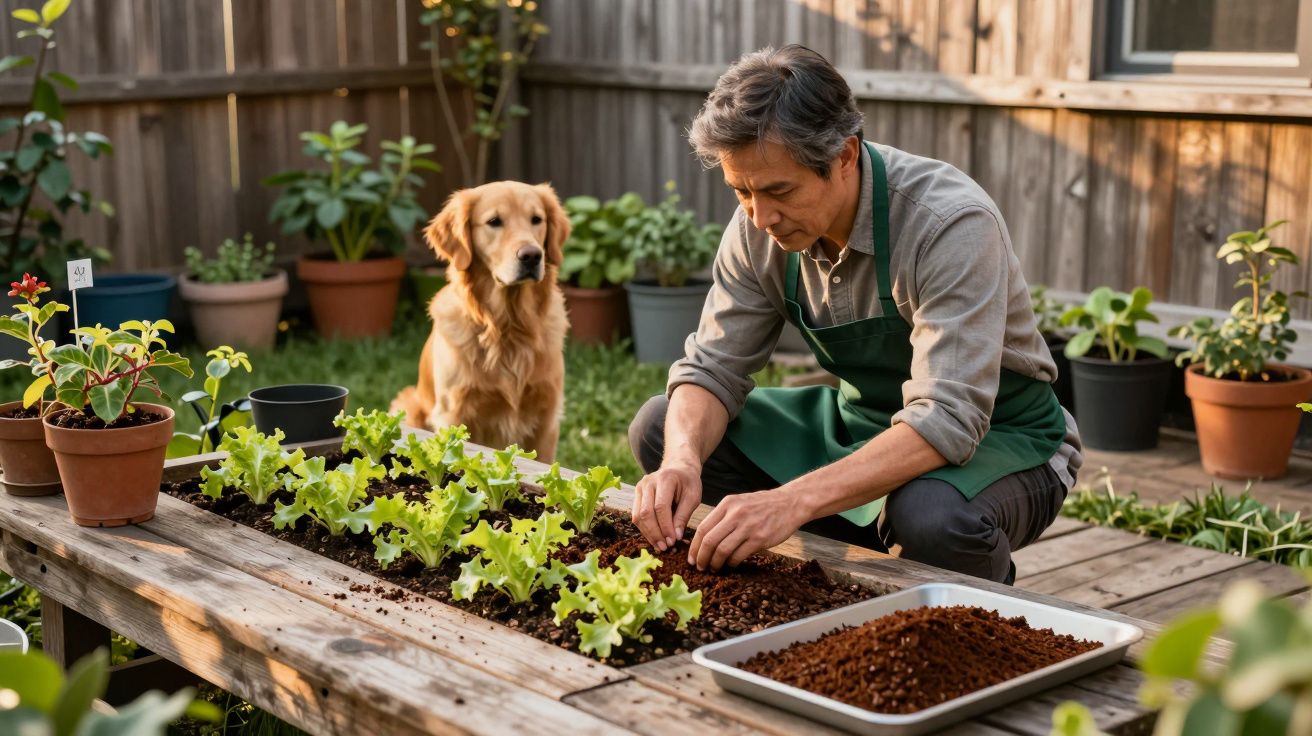
Slimy trails across the veg patch and seedlings sheared off at soil level can ruin weeks of careful sowing. Many gardeners now hesitate before scattering commercial slug pellets, especially near edible crops, wildlife ponds or pets.
Instead, a simple kitchen by‑product is finding its way to the borders. Used coffee grounds, dried and sprinkled in a ring around young plants, are being shared as a low‑tech barrier that puts slugs off without adding more chemicals to the plot.
The method is quick, almost free and easy to top up after rain. It will not turn a garden into a fortress on its own, but as part of a layered defence it can tip the balance back in favour of your seedlings.
Key move before you reach for pellets: save your coffee grounds, dry them, and spread a thin, continuous ring around the seedlings you most want to protect.
Why slugs are ruthless on seedlings
Slugs and snails are opportunists. Tender shoot tips, soft stems and thin seedling leaves are exactly what they seek out on damp nights. A single hungry slug can clear an entire row of lettuce or beetroot in hours.
Young plants have little stored energy and few leaves to spare. Lose the growing tip, and they rarely recover. That is why the first two to three weeks after planting out are so critical.
Night‑time moisture, dense ground cover and rich soil all favour slugs. Seedbeds in freshly improved soil or along shady fences are particularly exposed. That is where a simple physical deterrent can make a clear difference.
Why coffee grounds help
Used coffee grounds bring together three useful properties. The texture is slightly abrasive, the particles cling to slug slime, and the smell and taste appear unappealing to many molluscs. Gardeners report fewer bite marks on seedlings surrounded by a light ring of grounds compared with unprotected plants.
The effect is partly physical. Slugs prefer to glide on smooth, moist surfaces. A dry, gritty band presents a patch they are reluctant to cross. The effect is also temporary, which is why topping up matters.
Coffee grounds are not a poison; they act more as a short‑term “no‑go zone” that nudges slugs to easier pickings elsewhere.
Some research suggests high concentrations of caffeine can affect slugs and snails, but the strength in ordinary spent grounds is far lower. Think of them as a deterrent and barrier, not a guaranteed lethal treatment.
How to use coffee grounds step by step
The method rests on dry grounds, a continuous barrier and timely renewal.
Collect and dry the grounds
- Spread used grounds thinly on a tray or piece of cardboard.
- Leave them in a warm, airy place until they feel dry and loose, not clumpy or soggy.
- In wet weather, you can use a very low oven for 10–15 minutes to finish drying.
- Spread used grounds thinly on a tray or piece of cardboard.
Prepare the soil around seedlings
- Gently weed and level the soil surface around each plant.
- Remove fallen leaves, stones and thick mulch that could bridge your barrier.
- Aim for a bare ring of soil at least 5–8 cm wide around each seedling.
- Gently weed and level the soil surface around each plant.
Sprinkle a thin, even ring
- Using your fingers or a small scoop, scatter the grounds in a continuous circle.
- The band should be about 2–3 cm wide and no more than a few millimetres deep.
- Avoid piling grounds against the stem or burying the base of the plant.
- Using your fingers or a small scoop, scatter the grounds in a continuous circle.
Check the barrier after rain or heavy dew
- Moisture quickly flattens and softens the grounds.
- Once they look dark, clumped or mud‑like, renew the ring with a fresh, dry layer.
- In very wet spells, prioritise your most slug‑prone crops rather than the entire bed.
- Moisture quickly flattens and softens the grounds.
Combine with inspection and hand‑picking
- On mild, damp evenings, inspect with a torch and remove any slugs inside the protected area.
- Drop them into soapy water, move them to a wild corner well away from crops, or dispose of them according to your garden ethics.
- On mild, damp evenings, inspect with a torch and remove any slugs inside the protected area.
Where this works best (and where it does not)
Coffee‑ground rings are most effective in focused spots rather than broadcast across whole borders. Think:
- Freshly planted lettuce, brassica and beetroot seedlings.
- Young dahlias, hostas and lupins that often draw heavy slug attention.
- Pots, raised beds and small salad patches you can reach easily.
They are less useful where:
- Soil stays saturated and heavy for days on end.
- Dense ground cover plants or long grass allow slugs to bridge over the barrier.
- You already have very high slug populations and abundant hiding places.
Treat coffee grounds as a targeted “guard ring” around key plants, not as a cure‑all for an entire, slug‑ridden garden.
Common mistakes to avoid
A few habits can quietly undo the benefits of this method.
- Using wet or clumpy grounds: these flatten into a soft mat that slugs slide over easily.
- Making a thick, suffocating layer: over time, a heavy layer can form a crust, shed water and disturb soil structure.
- Letting mulch touch the ring: straw, bark or leaves resting across the band give slugs a bridge.
- Relying on grounds alone: in a bad slug year, no single tactic is enough; variety matters.
If you notice seedlings still being eaten inside a fresh ring, assume you already had slugs in the bed or that the barrier was bridged. Reset the ring after a gentle surface hoe, and add a second line of defence that night, such as hand‑picking or a beer trap.
How coffee grounds compare to other pellet‑free options
You do not have to pick a single method. The most resilient gardens blend several low‑impact tactics.
| Method | Main strength | Main limit |
|---|---|---|
| Coffee grounds ring | Cheap, reuses waste, quick to apply | Washes away quickly, needs dry spells |
| Copper tape/collars | Long‑lasting round pots and stems | Costly for large beds, less effective when muddy |
| Beer traps | Attracts and drowns nearby slugs | Needs frequent emptying, may draw in more slugs |
All these still benefit from basic cultural steps: clearing slug shelters, watering in the morning rather than evening, and allowing predators such as frogs, ground beetles and birds to thrive.
Making it part of a layered slug strategy
Think in terms of layers rather than a single “magic” fix. A practical routine for a small veg patch might look like this:
By day
- Lift spare pots, old boards and debris where slugs hide; remove what you find.
- Keep grass edges trimmed near beds to reduce damp hiding strips.
- Water early; dry surfaces by night make slugs travel further, across your barriers.
- Lift spare pots, old boards and debris where slugs hide; remove what you find.
At planting time
- Plant sturdy, well‑grown seedlings rather than fragile, thread‑thin starts.
- Add a ring of dry coffee grounds and, if needed, a collar or cloche for the first week.
- Avoid planting out just before a forecast of several wet, mild nights.
- Plant sturdy, well‑grown seedlings rather than fragile, thread‑thin starts.
At dusk on risky nights
- Walk the beds with a torch, especially around high‑value plants.
- Hand‑pick and dispose of slugs within your protected zones.
- Renew any flattened coffee rings on the spot.
- Walk the beds with a torch, especially around high‑value plants.
A few minutes of evening checks combined with simple barriers often spares more seedlings than a one‑off scatter of pellets.
A brief, real‑world example
One small‑space gardener in a terraced street in Leeds had repeated losses on trays of lettuce and basil hardening off by the back door. Pellets were off the table because of a curious dog and a tiny city garden.
She began saving grounds from her morning cafetière, drying them on a baking tray beside the hob. Every time she set a tray of seedlings outside, she laid a narrow ring of grounds around the pot rims and along the shelf edge. Losses did not disappear, but they dropped sharply. Combined with a quick torch round on damp nights, most seedlings now reach planting size intact.
The approach cost nothing, slotted into existing habits and avoided extra products. That is how many gardeners now treat coffee grounds: as a modest but worthwhile layer in a broader, more wildlife‑friendly slug plan.
FAQ:
- Will coffee grounds change the soil pH or harm my plants? In the small quantities used as a thin ring, spent coffee grounds are unlikely to dramatically alter soil pH or damage plants. Problems tend to arise only when large volumes are dug in or piled thickly over the surface, where they can form a crust and slow water movement. Keep the layer light and localised.
- Can I just tip fresh, wet grounds straight from the cafetière into the bed? You can, but they will be far less effective as a barrier. Wet grounds clump and quickly become a soft mat that slugs cross easily. Drying them first gives you the loose, gritty texture that discourages slugs and lasts longer between showers.
- Does this work for snails as well as slugs? Many gardeners report fewer snail attacks on plants surrounded by coffee grounds, but snails can sometimes bypass barriers by climbing walls, stakes or neighbouring plants. For snails, pay extra attention to removing climbing routes and hiding spots near vulnerable seedlings.
- Is it safe for pets, birds and hedgehogs? Ordinary spent grounds used sparingly are generally considered low‑risk in the garden, especially compared with metaldehyde pellets, which are now banned for outdoor use in Great Britain. Even so, avoid leaving thick piles where dogs might be tempted to eat them, and do not mix grounds into pet bedding or feed.
- What if I do not drink coffee? You can ask local cafés for a small bag of used grounds (many are happy to give them away), or focus on other barriers such as copper rings, wool pellets and night‑time hand‑picking. The principle remains the same: a few simple, physical measures, refreshed regularly, often protect more seedlings than you think.



Comments (0)
No comments yet. Be the first to comment!
Leave a Comment