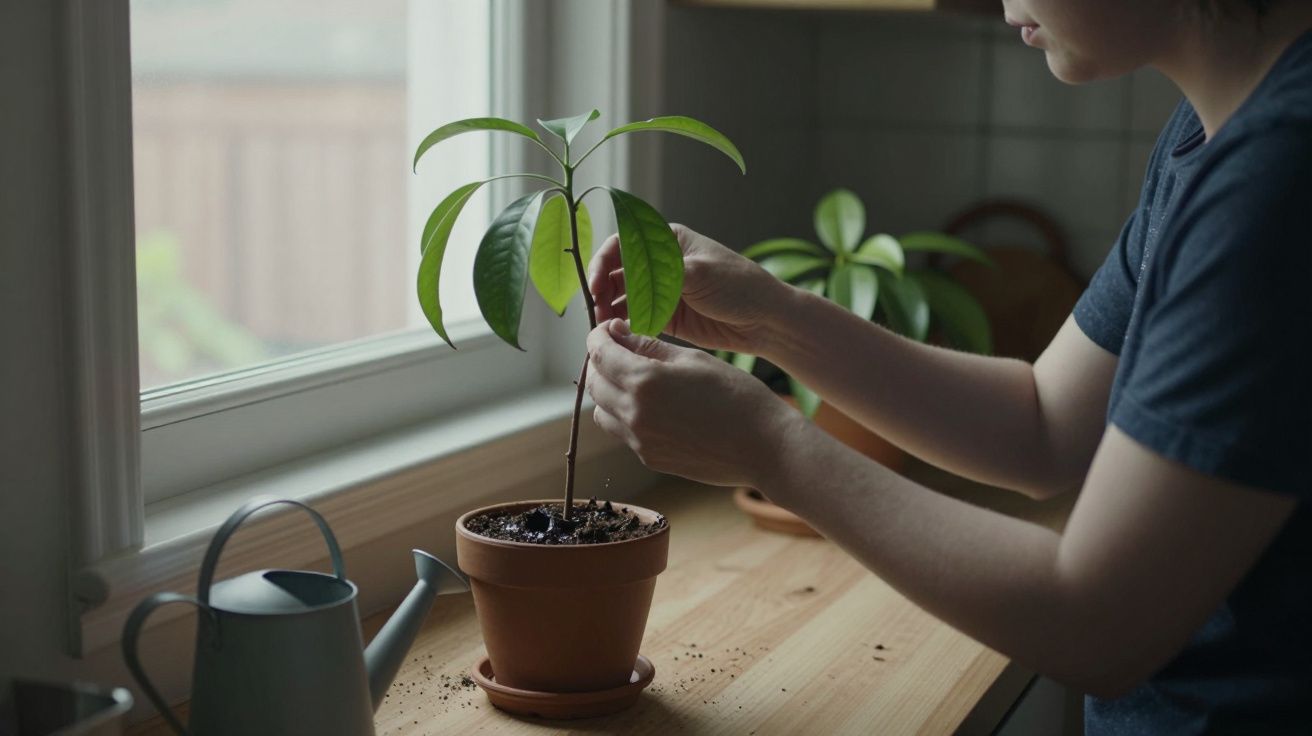
You water, you fuss, you turn the pot to the light – and yet the plant still slumps like it’s given up. The compost is damp, sometimes even soggy, so you add a bit more water “just in case”. A day later, the top leaves look even more defeated.
It feels backwards. Thirsty plants droop, so more water should help, not make things worse. That’s exactly why root rot creeps up on people who actually care about their plants. The problem starts where you can’t see it, but the first honest warning often appears right in front of your eyes – on the top growth.
Picture this: the newest leaves at the top lose their perk, hanging slightly to one side. They’re not crisp or dry like a sunburnt leaf; they’re soft, almost floppy, as if the plant has been left in a hot car. You touch the soil and it feels wet. That mismatch – limp leaves, wet compost – is your red flag.
Once you know what to look for, the plant is practically waving for help.
The leaf change that screams “roots in trouble”
A healthy, well‑watered plant holds itself up. Even if the lower leaves age and drop, the top stays alert and slightly firm to the touch. With root rot, the story flips: the trouble sits in the pot, but the signal rises from the top.
What gardeners notice first is a strange, heavy droop that doesn’t match the watering schedule. You water on Monday; by Wednesday the top leaves are still hanging, sometimes worse. There is no quick “drink and bounce back” like you see with a genuinely thirsty plant.
Look closely at those top leaves:
- They feel soft and bendy, not crisp.
- The colour may dull to a slightly greyish or washed‑out green.
- The newest leaves may stay small, twisted or half‑unfurled.
- When you lift the stem gently, the whole top section may tilt loosely on the base instead of feeling anchored.
The key giveaway is this:
If the top leaves are sagging but the compost is consistently moist or wet, think “root rot” before you reach for the watering can again.
Other “above‑ground” signs that point to rot
You don’t need to unpot the plant straight away to start joining the dots. Your eyes – and nose – give you plenty of early clues.
What shows up on leaves and stems
Beyond that first odd droop, keep an eye out for:
- Yellowing that starts from the bottom and moves up, while the soil never seems to dry.
- Brown patches that look water‑soaked, not crispy. The edges may stay soft for days.
- Leaves that fall off with the slightest knock, especially older ones, leaving bare, thin stems.
- Stems near the soil line turning dark, soft or wrinkled, as if they’re collapsing in on themselves.
- For vining plants (pothos, philodendron, ivy), sections of stem that suddenly fail – everything past a certain node droops and dies back together.
The timing matters. If these changes appear while you’re watering regularly and the room is cool or dim, root rot climbs high on the suspect list.
What you notice around the pot
Your plant’s environment quietly confirms the story:
- The pot feels surprisingly heavy days after watering.
- The compost surface stays dark and wet‑looking, instead of lightening and crusting slightly as it dries.
- There’s a sour, stagnant smell when you sniff near the soil.
- Tiny fungus gnats hover when you water or disturb the pot.
- Water sits in the outer cachepot or saucer for hours or days.
- A compacted surface; water pools on top before slowly sinking in.
When several of these line up with that stubborn droop at the top, you’re not dealing with a fussy plant. You’re looking at early‑stage root rot.
Why roots rot even when you’re “doing everything right”
Roots need air as much as water. In a healthy pot, water runs through quickly, leaving behind moisture and pockets of oxygen. In a waterlogged one, every gap between soil particles fills with water and stays that way. Roots, starved of air, suffocate and die back. Fungi and bacteria then move into the soft tissue.
Common set‑ups that quietly push plants towards rot:
- Pots without drainage holes, or decorative covers that trap extra water.
- Heavy, compact compost for species that prefer an airy mix (e.g. orchids, succulents, monsteras).
- Watering on a fixed calendar rather than checking how quickly the plant actually dries out.
- Keeping the same summer watering routine in short, dark winter days, when the plant barely grows.
- Large pots around small root systems; the compost stays wet for far longer than the plant can drink.
From the top it looks like you’re being attentive. At root level, the plant is sitting in a slow‑motion flood.
What to do at the first hint
You don’t have to panic‑repot at the very first droop, but you do need to switch from “add water” to “investigate”.
Quick checks before you unpot anything
Start with low‑mess detective work:
- Finger test: push your finger 3–4 cm into the compost. If it’s cold and wet, do not water.
- Weight test: lift the pot with one hand. Over time, you’ll learn the difference between light and thirsty vs heavy and soaked.
- Skewer test: insert a wooden skewer or chopstick deep into the pot. Leave it for 10–15 minutes, then pull it out. Dark, soggy wood or clinging compost means the centre is still very wet.
- Look under the pot: roots poking through drainage holes and sitting in standing water are a warning sign.
If the plant is drooping at the top and all these checks say “still very wet”, it’s time for a gentle but firm intervention.
Emergency rescue: triage for soggy plants
Think of this as first aid. You’re trying to stop the rot, save the living tissue, and reset the conditions.
Slide the plant out of its pot
Hold the base of the stems, tip the pot on its side, and ease the root ball out. Support it with your hand.Inspect the roots
Healthy roots are usually white, cream or light tan and feel firm. Rotting roots look brown or black, slimy, and may smell sour. Some may slough off in your fingers like cooked noodles.Trim away the damage
With clean, sharp scissors or secateurs, cut off all mushy, blackened or hollow roots. Don’t be timid: it’s better to have a smaller, healthy root system than a large, diseased one.Rinse and treat (optional but helpful)
Gently rinse the remaining roots in lukewarm water to remove old compost. You can dust them lightly with cinnamon or a commercial fungicide to discourage further rot.Repot in fresh, airy mix
Choose a pot with drainage holes and a size that matches the trimmed root ball. Use fresh, suitable compost:- General houseplants: multi‑purpose compost mixed with perlite or bark.
- Succulents & cacti: a gritty, fast‑draining mix.
- Orchids: chunky bark‑based medium.
Water once, then wait
After repotting, water lightly to settle the mix, then let the top few centimetres dry before watering again. Place the plant in bright, indirect light and avoid fertiliser until you see new growth.
A simple rescue checklist:
- Remove from pot and inspect roots.
- Cut off all mushy or black roots.
- Rinse and (optionally) treat the remaining roots.
- Repot in fresh, well‑draining mix and a pot with holes.
- Water sparingly and give bright, gentle light while it recovers.
How to water so rot doesn’t sneak back
Once you’ve seen root rot once, you tend not to forget it. The trick is to shift from automatic watering to responsive watering.
- Water thoroughly, then allow some drying rather than giving tiny sips every day.
- Empty any outer covers or saucers 10–15 minutes after watering so roots don’t sit in a puddle.
- Match the mix to the plant: more sand, grit or bark for species that hate “wet feet”.
- In winter, cut watering right back, sometimes to half or a third of your summer frequency.
- When in doubt, wait a day and check again. Most houseplants tolerate slight dryness far better than constant damp.
This quick table can help you decode what you’re seeing:
| What you see above the soil | Likely issue | Simple next step |
|---|---|---|
| Leaves limp, soil wet, sour smell | Root rot | Unpot, check roots, trim and repot |
| Leaves limp, soil bone dry, pot very light | Under‑watering | Water deeply, then monitor recovery |
| Yellow leaves but firm, soil drying normally | Natural ageing / mild stress | Remove old leaves, review light and feeding |
| Brown, crispy edges, soil dries very fast | Too dry / low humidity | Water more deeply, improve humidity, check light |
Root rot or something else?
Not every droop is rot, and not every yellow leaf is a disaster. A few quick distinctions:
Under‑watering
Leaves droop but feel thin and papery, soil is clearly dry, and the plant perks up dramatically within hours of a good drink.Nutrient deficiency
Leaves may yellow evenly, but roots are generally healthy and the soil dries at a normal rate. There is no sour smell, and stems remain firm.Pests (e.g. spider mites, thrips)
You’ll often see spots, webbing or distorted growth, and the soil moisture may be fine. Root rot, by contrast, pairs top problems with persistently wet compost.
When you connect the sagging top, the wet pot, and the sluggish, heavy feel of the plant, root rot stops being an invisible mystery. It becomes a pattern you can catch early – and often fix – long before the whole plant collapses.
FAQ:
- Can a plant recover fully from root rot?
Yes, if you catch it before most of the root system is lost. After trimming damaged roots and repotting in fresh compost, many plants regrow strongly, though they may look sparse for a while.- Should I fertilise a plant that’s had root rot?
Not immediately. Wait until you see clear signs of new growth. Fertiliser can stress weakened roots; fresh compost usually provides enough nutrients for the first few weeks.- Is root rot contagious to other plants?
The conditions that cause rot (constant wetness, poor drainage) spread more easily than the rot itself. Keep affected plants slightly apart, clean your tools, and avoid reusing old compost.- Will root rot fix itself if I just stop watering?
Simply withholding water rarely reverses advanced rot. You usually need to unpot, remove rotten roots, and repot into fresh, better‑draining compost.- Are some plants more prone to root rot than others?
Yes. Succulents, cacti, and many aroids (like monstera and philodendron) strongly dislike sitting in wet soil. They need particularly well‑draining mixes and careful watering, especially in winter.






Comments (0)
No comments yet. Be the first to comment!
Leave a Comment