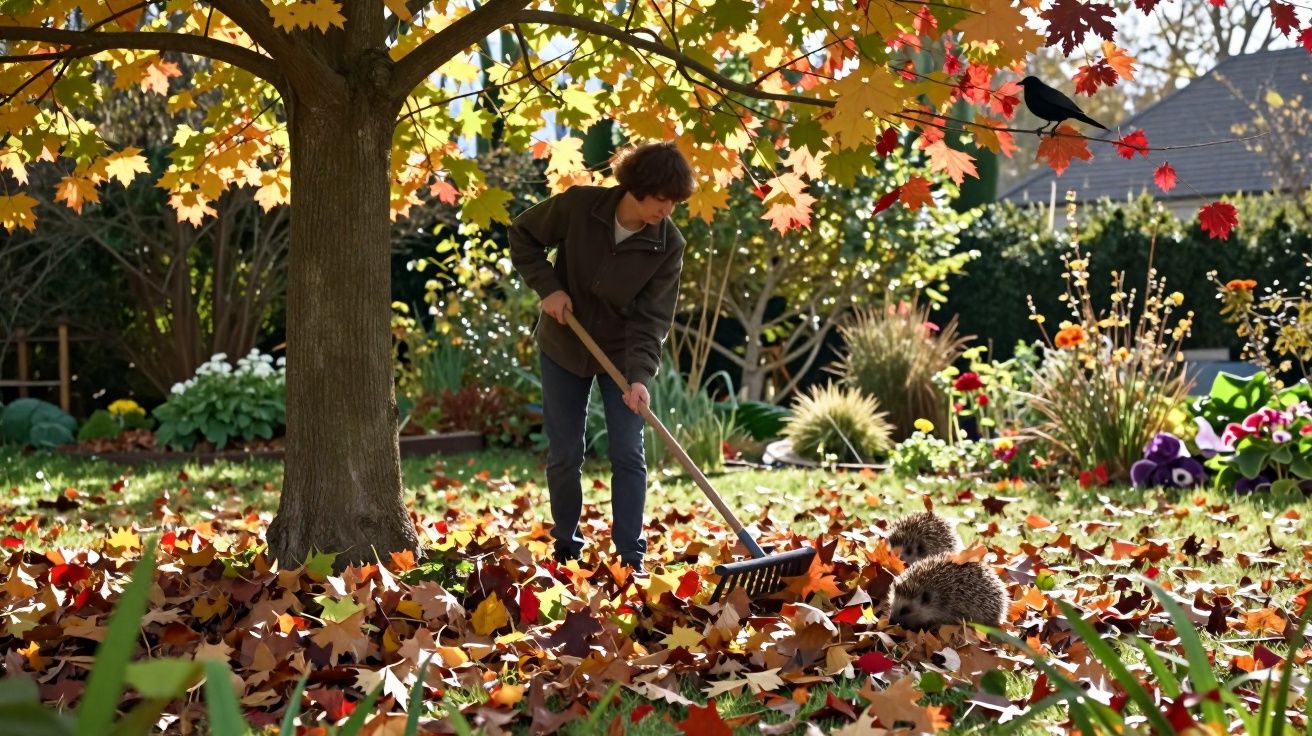
On a damp Saturday afternoon, the street hummed with autumn chores. One neighbour wrestled a leaf blower up and down his drive, orange and brown scraps spinning like confetti before vanishing into black bags. Two doors down, someone in an old jumper and wellies was doing the opposite: gently raking leaves under a hawthorn, topping up a quiet, hummocked corner of the garden. Between the shrubs, something rustled once, then went still. A hedgehog, maybe. Or a blackbird scouting tomorrow’s breakfast.
Further along the road, council crews piled leaves into lorries, engines idling, while a child kicked at a heap that smelt faintly of earth and apples. You could almost feel the fork in the path: one route towards spotless lawns, the other towards small, hidden lives that need somewhere to hide.
The safest place is sometimes the messiest.
Why a messy garden can be a lifesaver
Wildlife groups across Britain are repeating the same autumn plea: resist the urge to strip your garden bare. Those drifting piles of leaves are not just “tidy-up fuel” – they are winter shelter for hedgehogs, ladybirds, moths and countless tiny creatures that pollinators depend on. A thin layer on borders acts like a duvet, buffering frosts and feeding the soil as it breaks down. Under hedges and behind sheds, deeper heaps become ready-made nesting sites. In a year when many species are under pressure, a bag of leaves left out for collection is, in effect, a bag of habitat thrown away.
In one small terraced garden in Bristol, a family decided to leave a scruffy corner untouched last October. By January they had trail‑cam footage of a hedgehog shuffling in and out of a leaf pile, and in early spring a queen bumblebee began using the same patch as a launchpad. Multiply that by thousands of gardens and the picture changes. Monitoring by conservation charities already shows hedgehogs hanging on better in towns and cities where gardens are joined up and less manicured. Pollinating insects tell a similar story: where there is year‑round cover and food, their numbers stabilise or even creep back.
Logically, it makes sense. Many butterflies, moths and beetles spend winter as eggs, larvae or pupae in leaf litter. Spiders and ground beetles hunt through it; birds then feed on them. The leaves slowly return nutrients to the soil, improving structure and helping it hold rainwater – a quiet defence against both drought and flash flooding. Every time we scrape them into plastic sacks, we remove that free service and ask councils to burn fuel carting it away. The “leave the leaves” message isn’t about giving up on care; it’s about swapping constant stripping for strategic kindness.
| Key point | Detail | Why it matters |
|---|---|---|
| Shelter | Leaf piles give hedgehogs, insects and amphibians places to overwinter | Boosts survival through the hardest months |
| Food | Leaves host worms, larvae and fungi | Feeds birds, bats and other predators higher up the chain |
| Soil cover | A light layer protects and enriches soil | Cuts erosion, locks in moisture and reduces runoff |
How to ‘leave the leaves’ without annoying the neighbours
Start with a simple three‑zone approach. Zone one is “wild”: under hedges, at the back of borders, behind sheds. Here you can let leaves gather into thick, rustling blankets that hedgehogs and insects will love. Zone two is “mulch”: spread a loose layer over flowerbeds and around shrubs, roughly the thickness of a hand, to insulate roots and feed the soil. Zone three is “clear”: keep paths, steps, doorways, drains and lawns you actually use free of slippery or smothering piles. If you prefer neat grass, run the mower on a high setting over dry leaves so they shred into a fine, soil‑feeding confetti instead of vanishing into bags.
The goal is not to turn every garden into a miniature woodland floor overnight. Small, deliberate pockets of “untidiness” are enough. Avoid piling wet leaves against house walls or fences where they can trap damp, and keep pond edges partly clear so wildlife can climb in and out safely. If you’re worried about slugs, remember that a balanced leaf layer supports their natural predators too – frogs, beetles, birds and, yes, hedgehogs. And before you light any autumn bonfire, always rebuild it on the day and check the heap carefully; to a hedgehog, a leaf pile looks very much like home. It’s normal to care how your patch looks. You’re simply broadening what “looked after” means.
One urban ecologist puts it simply:
“A slightly scruffy corner isn’t neglect. It’s a deliberate act of care for species that have nowhere else to go.”
To keep it practical, use this quick checklist:
- Leave the deepest leaf piles under shrubs, hedges and in a back‑of‑garden “wild zone”.
- Mulch borders and beds with a loose layer; avoid burying small plants completely.
- Keep hard surfaces, steps and drains clear for safety and to prevent blockages.
- Shred leaves on lawns rather than bagging them, or rake them into nearby beds.
- If neighbours worry, explain you’re creating winter shelter for hedgehogs and pollinators, not “letting things go”.
A different kind of autumn ritual
Imagine an autumn where the loudest sound is not the whine of blowers but the soft thud of leaves settling where they fall. Streets would still be safe to walk, paths still swept, drains still flowing. But behind garden fences, there would be more pockets of quiet, more places where a hedgehog can curl up unseen and sleep through the frost. Children would learn that “messy” isn’t a failure, it’s part of how a garden breathes and recovers each year.
This isn’t a grand, expensive conservation project. It’s a modest shift in habit that you can make in an hour one weekend, and then keep making, season after season. You might even notice new visitors: a wren flitting along a hedge, a toad under the potting bench, a bee queen nosing through last year’s leaves. Share it at the school gate, in the allotment queue, over the fence. A leaf left on the ground is a quiet invitation to life.






Comments (0)
No comments yet. Be the first to comment!
Leave a Comment