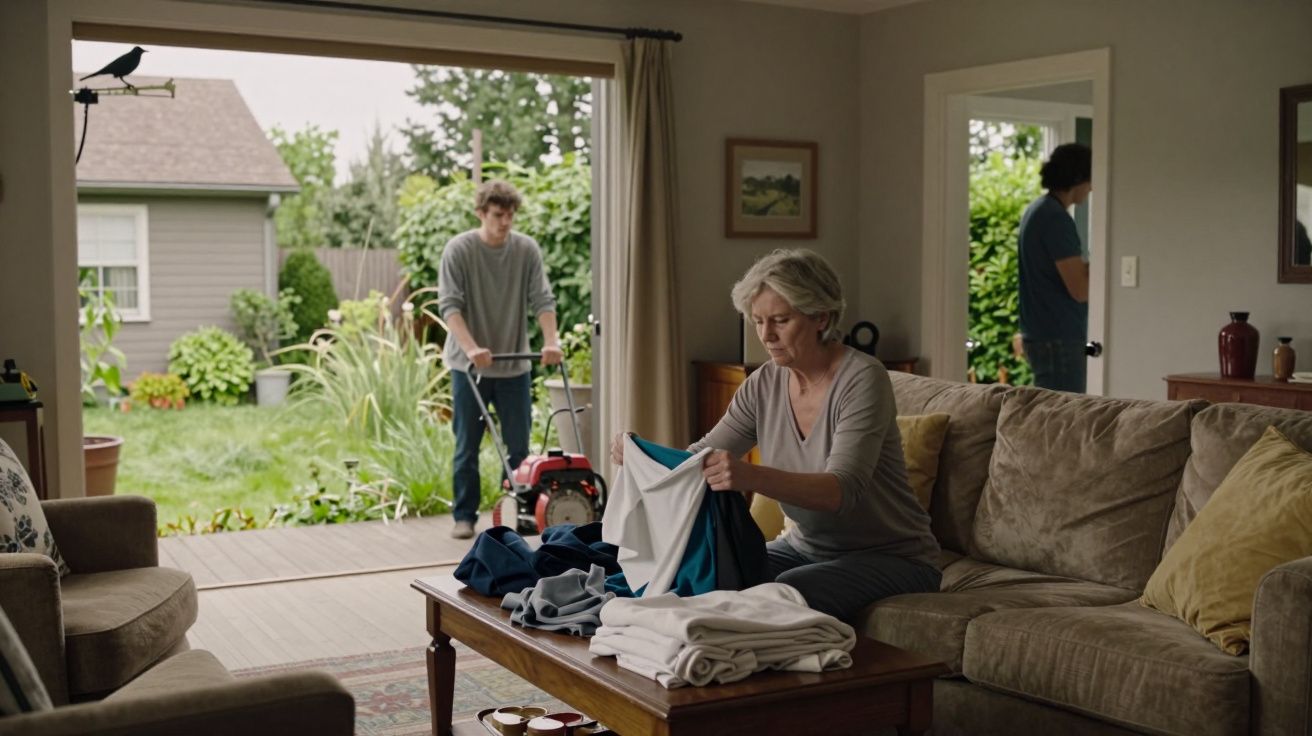
The first Saturday under the new “quiet lawn” trial starts like any other: grey sky, a faint smell of rain, a dog barking three gardens over. Then something doesn’t happen. Ten o’clock comes and goes and the usual roar of petrol mowers never starts up. A blackbird takes full advantage, singing from the top of a TV aerial that no longer has to compete with a two‑stroke engine.
On one side of the hedge, a retired teacher is delighted. “You can hear yourself think,” she says, folding laundry in a house that no longer hums with distant machinery. On the other side, her neighbour stands in the doorway, glancing at the clock and the lawn already shading towards jungle. His work week is long, his evenings are dark, and the council has just taken away his only convenient time to cut the grass with the old petrol mower he inherited from his father.
Across several UK local authorities, this small domestic tension is about to be tested at scale. Councils from Surrey to Stockport are piloting weekend bans or time‑limited restrictions on petrol mowers and other garden machinery in residential streets, citing noise complaints, air pollution and a push for biodiversity. To some, it sounds like overdue relief. To others, it feels like overreach. The lawn, once the quietest of suburban status symbols, has become a battleground.
The new rules promise birdsong and cleaner air-but also force a rethink of how, and when, we tame the grass.
Why councils are suddenly interested in your mower
To environmental officers, a mower is not just a mower. It is a source of noise, exhaust fumes and, increasingly, political emails from residents who want their weekends to sound less like a small airport.
Petrol garden tools punch above their weight in decibels. A standard petrol rotary mower can reach 85–90dB at the user’s ear-loud enough, over time, to pose a hearing risk without protection. Leaf blowers and strimmers often climb higher. When dozens of gardens sync up across a neighbourhood on a sunny Sunday, the result can be a near‑constant drone from late morning to teatime.
There is the air side, too. Small petrol engines typically lack the emissions controls found in cars. Studies have suggested that an hour of mowing with certain petrol models can emit as much volatile organic compounds as a car driving hundreds of miles. In tight urban terraces and suburban crescents where exhaust hangs low on still days, that matters.
And then there is the grass itself. Over the past five years, “No Mow May”, wildflower verges and insect‑friendly lawns have moved from fringe ideas to council policy documents. Frequent close‑cut mowing is now quietly framed not just as noisy, but as hostile to pollinators.
To officials, the petrol mower has become the visible, audible tip of a much larger iceberg of noise, air quality and biodiversity concerns.
What “quiet lawn” rules actually do
The trial schemes vary by council, but they share a basic pattern: limit when loud, fossil‑fuel powered garden kit can be used, without technically banning lawn care.
A typical pilot includes some or all of the following:
- Weekend quiet windows: No use of petrol mowers, strimmers or leaf blowers before 10am or after 5pm on Saturdays, and a broader ban on Sundays and bank holidays.
- Equipment focus, not outcome: Electric and manual tools are exempt, so lawns can still be cut; it is the engine type that is targeted.
- Residential zones only: Rules apply in defined residential streets, not on farms, sports grounds or large estates.
- Soft launch and warnings: For the first few months, enforcement officers issue information leaflets and warnings rather than fines.
Councils stress that they are not policing grass length, just engine noise. That distinction does little to comfort residents who rely on a single petrol mower and feel boxed in by work hours and the British weather.
Let’s be honest: nobody schedules mowing with a diary and a decibel meter. People wait for a dry gap, grab the mower, and hope for the best. These trials ask them to check a clock, a forecast and a rule sheet first.
A street divided by the sound of silence
In one pilot area on the edge of a Midlands city, a crescent of 1930s semis shows how quickly attitudes can diverge.
Number 14, home to a young family, quietly applauds the change. Their toddler, once jolted awake from afternoon naps by next‑door’s mower, now sleeps through a Saturday for the first time in months. “We didn’t complain,” the father says, “but we thought about it. This saves any awkwardness.”
At number 18, a nurse who works night shifts is less impressed. His only viable time to cut the lawn has been late Sunday morning. His mower is old and loud, but his budget is tight. Under the trial, his traditional “post‑round” mow would be a technical breach.
A few doors down, at number 22, an 82‑year‑old widow wonders what the fuss is about. She has pushed the same manual cylinder mower up and down her small lawn for forty years. To her, the quiet is familiar. The argument is new.
In many streets, the divide is not really about grass at all. It is about time, money, health-and who feels heard when rules are drawn up.
When consultation meetings are held in town halls at 6pm on weeknights, the room skews towards retirees and campaigners. Shift workers, carers and renters are less visible. That shapes which voices are labelled “the community”.
What the evidence says about noise, fumes and health
Behind the emotive talk of “nanny states” and “peace at last” sits a growing body of data.
Noise specialists note that repetitive, low‑frequency sounds like mower engines can be particularly stressful when they intrude into private space. Chronic exposure to environmental noise has been linked to higher rates of cardiovascular problems, sleep disturbance and anxiety. While a neighbour’s mower once a fortnight may not tip any scales, whole‑area soundscapes matter.
Air quality scientists add another layer. Petrol garden tools emit nitrous oxides, hydrocarbons and fine particles. These contribute to local smog and respiratory irritation, especially for people with asthma or chronic obstructive pulmonary disease.
Then there is the climate angle. Petrol mowers may seem trivial, but their cumulative emissions are now on the radar of councils tasked with meeting net‑zero pledges. Encouraging a shift to electric models, particularly those charged on a greener grid, is a relatively straightforward lever to pull.
Health experts tend to frame “quiet lawn” rules not as a magic bullet, but as one small, symbolic part of a wider move towards calmer, cleaner neighbourhoods.
The practical snags: cost, access and weather
Noble aims run into muddy realities at the garden gate. For many households, the obvious solution-switching to an electric mower-is not immediately simple.
Common sticking points include:
- Up‑front cost: Cordless battery mowers and trimmers can be significantly more expensive than budget petrol models.
- Power access: Not every garden has a safe outdoor socket or an easy cable route, especially in older terraces or upper‑floor flats with shared lawns.
- Battery anxiety: Larger lawns can outlast cheaper batteries, leading to half‑cut grass and frustration.
- Weather windows: Restricting noisy tools to narrow weekend time slots can leave entire weeks of growth if rain coincides with permitted hours.
Councils trialling the rules are under pressure to offer carrots as well as sticks. Some are exploring:
- Discount schemes with local retailers for electric kit.
- Loan libraries for shared tools managed by community groups.
- Guidance on low‑mow or meadow‑style lawns that tolerate longer gaps between cuts.
Still, take‑up will depend on more than leaflets. Lawns are deeply cultural objects in Britain, bound up with ideas of respectability, pride and property values. Letting the grass grow long on purpose can feel like a social risk.
Lawns, class and the politics of “neighbourly”
If you listen closely, debates about quiet lawn rules often slip from decibels to judgement. “Considerate neighbours” become shorthand for those who mow at the right times, in the right way, with the right tools.
In leafier suburbs, the move towards electric mowers is often framed as a lifestyle choice: quieter, greener, more refined. In tighter, poorer streets, a battered petrol model might be the only affordable option, handed down or bought second‑hand. The same sound is read differently depending on who is behind the handle.
A quiet cul‑de‑sac achieved by pushing certain residents to the margins is not the version of “peace” most councils claim to want.
Community mediators suggest that how rules are introduced matters as much as their content. Streets where neighbours already talk-via WhatsApp groups, noticeboards or actual hedgehole chats-cope better. They set informal mowing hours, share tools and look out for each other’s needs.
Where relations are already strained, “quiet lawn” rules can become another weapon in long‑running disputes over parking, bins or boundaries.
How to keep the peace (and your grass) under new rules
If your area is trialling or considering weekend petrol mower bans, there are ways to adapt that reduce both noise and neighbour tension.
- Audit what you actually need: If you have a small patch of grass, a manual mower or a basic corded model may suffice. Reserve petrol power, if still allowed mid‑week, for larger jobs.
- Talk before you cut: A quick word with next‑door-“When do you usually mow? Shall we avoid nap times?”-can prevent formal complaints later.
- Batch the noise: Coordinate hedge‑trimming, strimming and mowing into one short window rather than spreading it all afternoon.
- Explore wilder edges: Leaving a strip of longer grass at the back or sides can support insects and reduce total mowing time, without advertising “unkempt” front lawns to the street.
- Log the benefits: Notice if your home feels calmer, if you hear more birds, if your headaches ease. Real, personal gains make compliance feel less like a chore.
Perspectives in one glance
| Viewpoint | Main worry | Why it matters |
|---|---|---|
| Pro‑quiet neighbours | Constant weekend noise, disturbed sleep, fumes | Links to health, wellbeing, ability to enjoy home and garden |
| Petrol‑mower users | Loss of flexibility, cost of switching tools | Time‑poor or low‑income households risk being unfairly squeezed |
| Councils | Meeting noise, air and climate targets fairly | Trials must balance environmental goals with social equity |
What happens when the trial ends
Most councils have set a review period of 6–12 months for their “quiet lawn” experiments. During that time, they plan to gather:
- Noise readings before and after.
- Air quality data where monitors exist.
- Complaint numbers and themes.
- Feedback from residents, landlords and housing associations.
They will also listen to their own staff. Enforcement teams know better than anyone how workable a rule is when it meets real life. If officers spend weekends mediating rows over five‑minute overruns or borderline tools, enthusiasm for permanent bans may cool.
Conversely, if complaints about noise drop, hospital admissions for asthma show tiny improvements, and most people quietly switch to electric without fuss, “quiet lawn” rules could spread rapidly.
The sound of one cul‑de‑sac in 2024 may be the template for how Britain expects its neighbourhoods to feel in 2030.
Councils are quick to say that nothing is set in stone. Yet once habits change-once people invest in new equipment, once children grow up used to birdsong instead of engines-going back can feel like going backwards.
FAQ:
- Can councils really tell me when I can mow my lawn? Yes, within limits. Local authorities already have powers under environmental and noise legislation to set reasonable hours for noisy activities. The trials test how far that can apply to garden machinery without being disproportionate.
- Are electric mowers completely exempt? Current pilots focus on petrol engines, as they create most noise and air pollution. However, very loud electric tools could still be challenged under general nuisance rules if misused at antisocial hours.
- What if I only have a petrol mower and cannot afford a new one? Speak to your council. Some areas are exploring grants, discounts or tool‑sharing schemes. In the meantime, many pilots allow petrol use within restricted weekday hours.
- Will I be fined for breaking “quiet lawn” rules? During trial phases, councils tend to start with information and warnings. Persistent or deliberate breaches could eventually attract fixed‑penalty notices, but only after public notices and clear guidance.
- Does this mean I should let my lawn grow wild? Not unless you want to. The rules are about how you cut, not whether you cut. That said, slightly longer, less frequently mown grass can support wildlife and reduce the need for noisy tools.






Comments (0)
No comments yet. Be the first to comment!
Leave a Comment