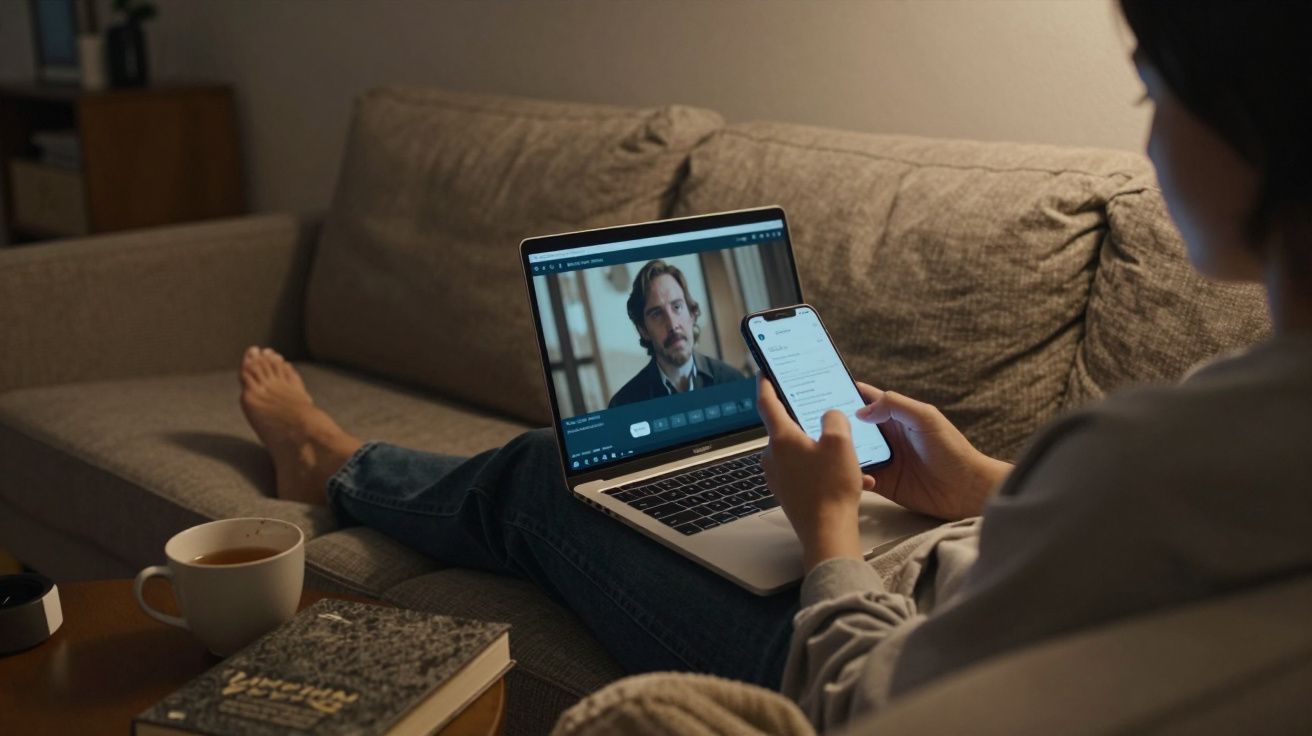
It starts with a tiny glow on the coffee table. One new email, subject line: “Quick one for tomorrow”. Then the WhatsApp ping: “Anyone free to jump on this now?” You’re halfway through a film, or bath time, or just staring at nothing in particular, and your body does that tight little jolt it’s been trained to do. You are technically off work. Your brain isn’t.
You wouldn’t call it a crisis. It’s more like background hum. A low, constant pressure to be reachable, reasonable, responsive. You tell yourself you’re just “getting ahead for tomorrow”, but the days bleed into evenings, weekends smudge into Mondays, and switching off starts to feel like an act of rebellion rather than a basic boundary.
The proposed UK “right to switch off” law tries to go after that hum, not just the occasional midnight emergency. It won’t magically delete emails after 6 p.m. It might do something more interesting: change what those pings are allowed to mean.
Why “switching off” is suddenly a legal question
The pandemic rewired working life faster than employment law could keep up. Dining tables became desks. Work phones blurred into personal ones. The office 9–5 quietly stretched into an always-on, “just one more message” culture. Many people like the flexibility. Far fewer like the feeling that their working day never really ends.
Current UK rules focus mostly on total hours and minimum breaks. They say little about when you can be contacted, or how often your rest time can be interrupted by a “quick” request. As long as your official hours look fine on paper, the law largely looks away from your evening inbox.
Other countries have already moved. France gave workers a formal right to disconnect in 2017. Ireland published a code of practice in 2021 that says employees should not be routinely expected to work or respond outside normal hours. Belgium, Portugal and others have followed with their own versions. The UK’s proposed move sits in that family: not a total blackout on after-hours emails, but a structured way to say “no” without paying for it with your career.
What a UK “right to switch off” would likely look like
There isn’t a final Act on the statute book yet. Think of it more as a direction of travel than a finished train timetable. But based on drafts, party pledges and international examples, a UK law would probably do three main things.
First, it would put a legal duty on medium and large employers to agree a “right to switch off” policy with their workforce. Not a poster on the wall; a live document spelling out:
- When staff are not expected to read or respond to emails, messages or calls.
- Which roles genuinely need on-call cover, and how that’s paid and rotated.
- What counts as urgent enough to break the rule – and who decides.
Second, it would likely give workers protection from being punished, directly or indirectly, for ignoring non-urgent contact outside working hours. That could mean:
- No subtle black marks on appraisals for “responsiveness” at 9 p.m.
- No expectation to be active in work WhatsApp groups every evening.
- A clear complaints route if you feel pressured to be always on.
Third, it would push managers to organise work so that “emergencies” are the exception, not the daily norm. If targets assume unpaid late-night catch-up, that becomes a legal risk, not a quiet advantage.
It’s less about the government telling you when to log off, and more about forcing your employer to talk honestly about when you’re allowed to.
So… will emails and WhatsApps just stop after 6 p.m.?
Not quite. The law is unlikely to pick a magic time like a school bell. A nurse on nights, a bar manager, and a software engineer with flexible hours don’t share the same “after work”. Instead, you’d see clearer lines based on your contract, not the clock on the wall.
In practice, for many day workers it could look something like this:
- Your contract says your normal hours are 9–5.30.
- The company policy says there is no expectation that you read or respond to emails, Teams messages or work WhatsApps outside those hours, unless you’re on an agreed on-call rota.
- Your manager can still send an email at 9 p.m. if that’s when they like to work, but the default understanding is: it waits. Any pressure to “just do this tonight” becomes much harder to justify.
On WhatsApp, the change could be even sharper. Many organisations are already uneasy about business-critical chat happening on encrypted personal apps they don’t control. A right-to-switch-off framework nudges them further:
- Work matters move to official channels where hours and expectations can be managed.
- WhatsApp or Signal groups become genuinely optional – social, not stealth overtime.
- Muting work chats in the evening stops being seen as antisocial and starts reading as normal.
You’d still be allowed to check in if it suits you. The real shift is that your silence stops counting against you.
“The point isn’t to ban late-night emails,” one employment lawyer put it. “It’s to remove the career penalty for going to bed.”
What won’t change overnight
Laws are blunt tools against culture. Even with a right to switch off, several realities stay messy.
Some jobs genuinely require out-of-hours contact: emergency services, certain IT roles, senior executives, on-call engineers, care workers. Those roles are unlikely to become 100% quiet after dark. Instead, you should see more explicit:
- On-call allowances or overtime for being available.
- Rotas that share the load rather than defaulting to “the keen ones”.
- Clarity about when you can decline without consequences.
Self-employed people and many freelancers sit largely outside this kind of protection; so do gig workers classed as independent contractors. If your income depends on saying “yes” to the next job, a formal right to disconnect has less bite.
And then there’s flexible working. Plenty of people prefer to log off at 3 p.m. for the school run and hop back on later in the evening. A rigid “no contact after 6 p.m.” rule would hurt them. Any UK version will need to build in the idea of chosen non-standard hours versus quiet pressure to always be on.
Don’t expect your inbox to lose weight on day one. Expect arguments, grey zones and a few test cases before the lines harden.
How your evenings might actually feel different
The most powerful change may be invisible: a background permission slip to treat your time as truly yours.
Imagine three small shifts:
The 8.42 p.m. “quick favour”
Today, you might sigh, open the laptop and fire off an answer “before it gets worse”. Under a right-to-switch-off regime, the default becomes: “I’ll pick this up in the morning.” If your manager routinely treats 8.42 p.m. as normal work time, that becomes a pattern you can challenge – with law, not just vibes, behind you.The buzzing WhatsApp group
Right now, muting a work chat can feel like stepping out of the room while everyone else networks. With a clear policy, that group is either:- social chatter you’re free to dip in and out of, or
- an unofficial work channel your employer is nudged to formalise and time-bound.
- social chatter you’re free to dip in and out of, or
Either way, the feeling that you must skim every meme “just in case” starts to fade.
- The creeping Sunday dread
Knowing you’re not supposed to be contacted – and that ignoring non-urgent contact is protected – can shrink the mental rehearsal you do on a Sunday evening. You can still plan for Monday. You just stop treating every buzz as a potential landmine.
The law doesn’t delete your notifications. It changes the story they tell.
Instead of “answer this or look uncommitted”, the subtext becomes “you can answer this when you’re back at work, and that’s fine”.
Practical moves workers and managers can start now
You don’t have to wait for Parliament to tidy up your notifications. Small, boring moves add up – and they’ll fit neatly into any future legal framework.
If you’re an employee
- Name your hours, clearly. Add them to your email signature and chat status. It sounds basic; it quietly educates people about when replies are realistic.
- Tidy your channels. Separate personal and work apps where you can. If work lives on WhatsApp, suggest moving important stuff to a more official place.
- Use delayed send. If you do work odd hours by choice, schedule emails to go out in core hours so you don’t normalise late-night traffic.
- Practice the neutral boundary. Phrases like “I’ll pick this up during my working hours tomorrow” are calm, factual and useful to have ready.
- Keep notes if it goes wrong. If you feel pushed to be always-on, jot down dates, times and what was said. Patterns matter more than one-off blips.
If you manage people
- Audit who really needs to be reachable. Distinguish genuine on-call roles from habits of last-minute planning.
- Write a simple contact hierarchy. For example: “Urgent safety issues = phone call via on-call rota. Everything else = email, answered in hours.”
- Model the behaviour. Don’t praise heroic midnight replies as the gold standard. Do publicly back people who log off on time.
- Tame the group chats. Set ground rules: no expectation of evening replies; no using social channels for new tasks after a set time.
- Fix the workload, not just the symptoms. If deadlines only work when people quietly donate their evenings, that’s a structural problem, not a responsiveness issue.
What might actually be different under a new law
| Key point | What it could mean day to day | Why it matters |
|---|---|---|
| No expectation to respond after hours | You can ignore non-urgent evening emails and WhatsApps without fearing subtle punishment | Protects rest time and mental health |
| Written “switch off” policy | Everyone knows the rules for contact, on-call and true emergencies | Reduces confusion and uneven treatment |
| Protection from retaliation | Poor reviews for “not being online at night” become challengeable | Makes boundaries safer to hold |
The right to switch off won’t fix every bad boss or broken workload. But it gives workers something they’ve largely lacked so far: a shared, enforceable language to say “this can wait”.
FAQ:
- Will it suddenly be illegal for my boss to email me at night?
Probably not. The likely focus is on expectation, not existence. Your boss can still send messages; they just shouldn’t expect a reply until you’re back on the clock, unless you’re formally on call.- What if I like working in the evenings?
You still can. A right to switch off doesn’t ban out-of-hours work; it protects your choice. The key test is whether you’re free to say “no” without career damage, and whether your total hours stay within legal limits.- Does this mean no more work WhatsApp groups?
Not necessarily, but it does push employers to treat them more carefully. You may see clearer ground rules, optional social-only groups, or a shift of formal instructions back into official tools where hours can be controlled.- How would this be enforced?
Likely through a mix of internal policies, union support, and ultimately employment tribunals if patterns of pressure or retaliation emerge. It won’t be policed message by message; think culture and systems, not one-off slips.- What should I do now if my evenings are constantly interrupted?
Start documenting, speak to your manager or HR with specific examples, and suggest practical fixes like clearer hours or an on-call rota. A future law will strengthen that conversation, but it already helps to frame it around health, fairness and sustainable workloads.





Comments (0)
No comments yet. Be the first to comment!
Leave a Comment