The roasting tin was still warm when you started the familiar scrape-and-rinse routine. Potatoes gone, gravy poured into a jug, plates stacked. On the side, a small, sorry pile gathered: limp parsley stalks, woody rosemary and thyme sprigs, the green bits that did their job flavouring the chicken and now seemed destined for the bin. They smelt incredible as you swept them into the food caddy, then down went the lid and that was that.
Except it does not have to be. Those stems hold more than leftover aroma. They are tiny packets of nutrients your balcony pots are quietly starving for, especially if they live in the same soil month after month. Turn them into a gentle fertiliser and you get two wins at once: less waste in the kitchen, more life in your containers, for essentially no extra cost.
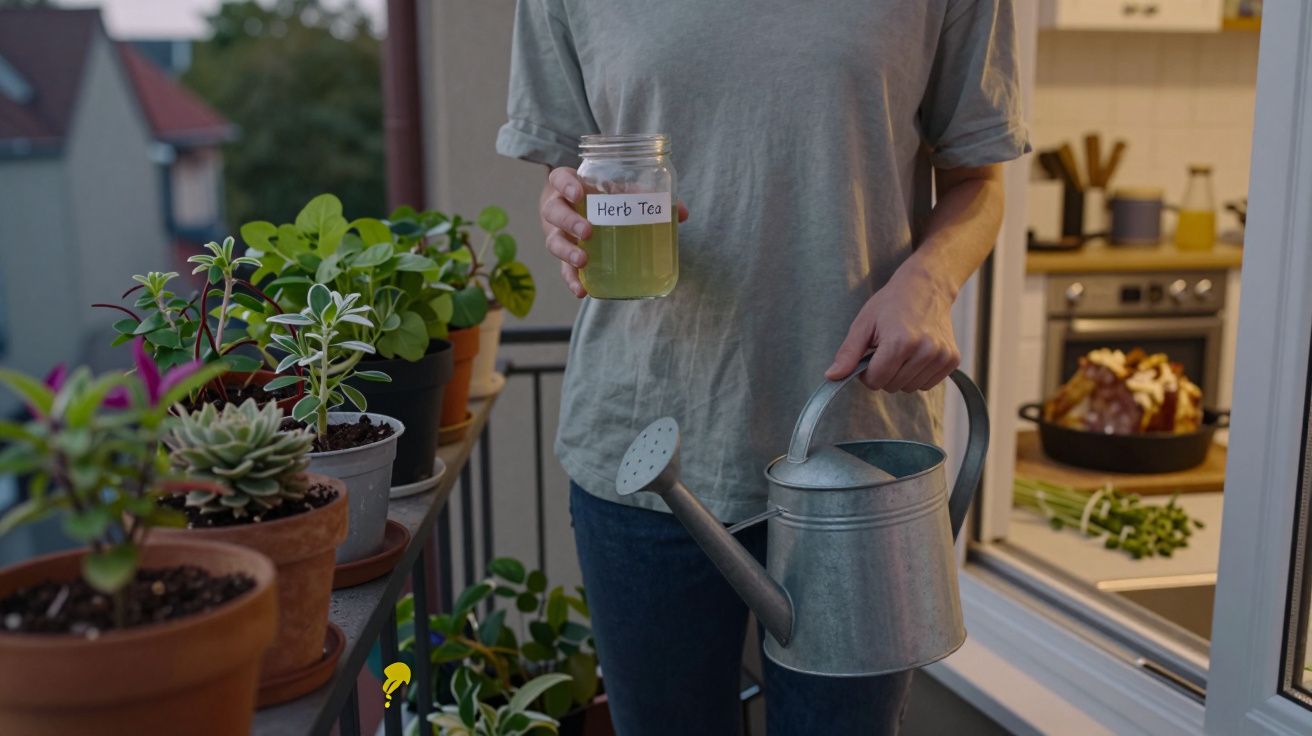
A gardener friend once showed me a row of vigorous salad leaves on a narrow London balcony. No expensive feeds, no fancy compost deliveries. Just a mismatched collection of jam jars under the sink, each faintly tinted green and labelled “parsley stems”, “mint stalks”, “herb mix”. Once a week, she would water her pots with this diluted “herb tea”. It sounded like a gimmick, until you realised how consistent the ritual was - and how healthy the plants looked.
Something very ordinary is happening here, and that is the point.
Why herb stems quietly feed container soil
Most of the herbs we throw on a Sunday roast - parsley, rosemary, thyme, sage, even the leafy tops from carrots or celery in the trivet - are grown in mineral‑rich soil. As they grow, they pull up nitrogen, potassium, calcium and a scattering of trace elements, then lock them into their leaves and stems. When you discard those stems, you are literally throwing those captured nutrients away.
In a garden bed, that is annoying but manageable. In a balcony pot, it matters more. Container soil is a closed system. Every time you water, a tiny bit of nutrition leaches out of the drainage holes. Every time you harvest herbs or cut flowers, more nutrients leave in your hands. Unless you regularly top up with compost or fertiliser, that potting mix gets poorer each season, even if it still “looks” fine.
Letting herb stems break down in water and returning that to your pots is just a very small, local form of composting. Microbes start to digest the plant material, minerals dissolve into the water, and you end up with a mild, home‑made liquid feed. Not as punchy as shop fertiliser, but kinder and harder to overdo - ideal for people who are wary of burning roots or overfeeding small pots.
Soft, green stems like parsley, coriander, basil and mint are especially useful. They break down quickly and release a gentle wash of nitrogen that leafy plants love. Woody rosemary and thyme stems contribute less directly but still add trace elements over time and can be chopped and used as a slow‑release mulch on the soil surface. You are not making industrial‑strength plant food; you are nudging the nutrient cycle back towards balance.
Turning roast stems into balcony plant tonic
You do not need a garden shed, an allotment or a degree in horticulture. You just need to stop those stems leaving the kitchen.
1. Separate the right bits
Before you throw everything in the food caddy:
- Pick out herb stalks and leafy trimmings: parsley, coriander, dill, mint, celery leaves, carrot tops, soft thyme sprigs.
- Avoid anything oily, salty or meaty: no stems coated in fat, gravy, stock cubes or seasoning. A quick rinse under the tap is enough if they have brushed up against roast juices.
Woody rosemary and sage stems can still be used, but chop them finely and treat them more as slow‑release mulch than fast food.
2. Make a simple “herb tea” jar
Take a clean jar, jug or bottle with a lid. A 500 ml jam jar is perfect for an average flat.
- Roughly chop your stems.
- Pack them loosely into the jar, about halfway.
- Cover with cold water, put the lid on and give it a shake.
- Leave it at room temperature for 2–3 days, out of direct sun.
Over those days, the water will take on a pale green or brown tint and smell faintly herbal. That is your weak liquid feed. If it smells truly sour or rotten, you have left it too long - pour it on the compost and start again with a shorter steep.
3. Dilute before you pour
Herb tea is mild, but you still want to dilute it, especially in small pots.
- Strain out the stems.
- Top up the liquid with plain water at least 1:3 (one part herb tea to three parts water).
- Use this mix to water the soil, not the leaves, of your balcony plants.
Leafy herbs, salad leaves, strawberries and ornamentals in pots will all appreciate the extra trace elements. For very young seedlings, go even weaker (1:5) until they are established.
4. Use the solids as bonus mulch
Do not bin the strained stems straight away:
- Chop them finely with a knife or scissors.
- Scatter a thin layer over the surface of larger pots, keeping it away from direct contact with stems of the plants themselves.
- Cover with a sprinkle of dry compost or coir if you dislike the look.
This layer will break down slowly, feeding the topsoil and encouraging worms and microbes. In a small balcony ecosystem, those quiet helpers matter.
5. Build a habit that matches your life
The biggest mistake people make is trying to run a miniature farm on a full‑time schedule they do not have. Let us be honest: nobody is brewing precision fertiliser every week of the year.
Instead, hook the herb‑stem trick onto what you already do:
- Keep a labelled jar by the sink and add stems through the week, topping up with water as you go. Strain and start fresh each Sunday.
- Or make a batch only when you cook a roast or big herb‑heavy meal, and use that as a monthly “tonic watering” for your pots.
Small, repeatable moves will beat heroic, complicated projects every time.
What this hack actually does - and what it never will
Turning roast stems into feed is honest, low‑tech gardening. It will not transform a dying plant overnight. It will not turn a sunless balcony into a vegetable empire. What it can do is gently support plants that are already “almost coping” in pots that are “almost good enough”.
Here is where it helps:
- Topping up tired compost in long‑used containers without buying big bags of fertiliser.
- Supporting herbs and salad leaves that you harvest from often, replacing some of the nutrients you carry back to the kitchen.
- Reducing waste from the meals you already cook, which feels quietly satisfying in its own right.
And here is where it falls short:
- It will not fix root‑bound plants that desperately need repotting.
- It cannot replace proper feeding for very hungry crops like tomatoes or courgettes in small containers; those still benefit from a balanced organic fertiliser.
- Left too long, jars can go slimy or smelly. This is not a “set and forget for six weeks” system.
Think of it as a background helper. The main pillars of healthy balcony pots still apply: decent compost, appropriate pot size, enough light, and consistent (but not heavy‑handed) watering. The herb stems simply help you lose a little less goodness along the way.
“The best fertiliser is whatever you actually remember to use,” as one balcony gardener in Manchester put it, topping up her herb jar while the kettle boiled. “For me, that is the stuff that used to go in the bin.”
Simple ways to plug the kitchen into your balcony
Once you see stems as nutrients rather than waste, other small links start to appear.
- Keep a “green offcuts” tub in the fridge door for herb stalks, carrot tops and salad trimmings. When it is full, make a fresh jar of herb tea for your plants.
- Pair feedings with big cooking days: roast on Sunday, balcony tonic on Monday. Soup night, herb‑feed night. Let the kitchen calendar drive the gardening one.
- Rotate which pots get the boost, so the same container is not constantly soaked while others dry out.
- Combine with occasional top‑dressing: once or twice a year, add a couple of centimetres of fresh compost to each pot, then use herb tea as a gentle follow‑up.
A lot of urban gardeners give up because balcony care feels like one more whole hobby. Tying it to meals you are already cooking makes it feel less like a project and more like a loop: herbs to kitchen, stems to jar, jar to pots, new herbs again.
| Focus | What you do | Why it helps |
|---|---|---|
| Liquid feed | Steep chopped stems in water for 2–3 days, dilute and water pots | Returns dissolved nutrients to depleted container soil |
| Slow mulch | Chop strained stems and scatter thinly on pot surface | Feeds topsoil and soil life over time |
| Habit loop | Link jar‑making to regular cooking days | Keeps the routine realistic and low effort |
Letting the roast work twice
On a wet Sunday evening, when the oven door fogs the kitchen and the smell of garlic and herbs hangs in the air, it is easy to feel that the roast is the whole event. Plates cleared, dishwasher humming, food bin closed. End of story.
But it can be the start of a quieter one. The same parsley that brightened your gravy can go on to nudge a pot of rocket into another flush of leaves. The same thyme sprigs that perfumed your potatoes can, chopped and scattered, feed the soil that carries next month’s basil.
It is not dramatic. It will not show up as a huge number on a fertiliser packet. What it offers is more modest and more realistic: a small, steady return on something you already buy. Enough to keep balcony pots that bit fresher, herbs that bit thicker, and your sense that nothing is entirely wasted just a little stronger.
FAQ:
- Can I use any herb stems for this? Soft, green stems like parsley, coriander, basil, dill and mint work best for fast liquid feed. Woody herbs such as rosemary, thyme and sage are still useful but break down more slowly, so treat them mainly as chopped mulch rather than the core of your “herb tea”.
- Will herb‑stem fertiliser replace commercial plant food? Not completely. It is a mild, slow‑burn supplement that suits herbs, salads and light feeders. For heavy‑cropping plants in small pots - tomatoes, peppers, courgettes - you will still get better results by combining this with a balanced organic fertiliser.
- How often should I water with herb tea? For most balcony pots, once every 2–4 weeks during the growing season is plenty, with ordinary waterings in between. Over winter, when growth slows, cut back or stop entirely.
- Does the jar attract pests or smell bad? If you steep for only 2–3 days and keep the lid on, you should get a mild herbal smell, not a foul one. If the liquid turns very cloudy or sulphurous, discard it on the compost, rinse the jar and shorten the steep time next round.
- Is it safe for edible plants? Yes, as long as you only include clean plant material (no meat, fat or strong cleaning products) and water the soil, not the leaves you plan to eat the same day. You are essentially returning cooked‑free plant nutrients to other plants.




Comments (0)
No comments yet. Be the first to comment!
Leave a Comment