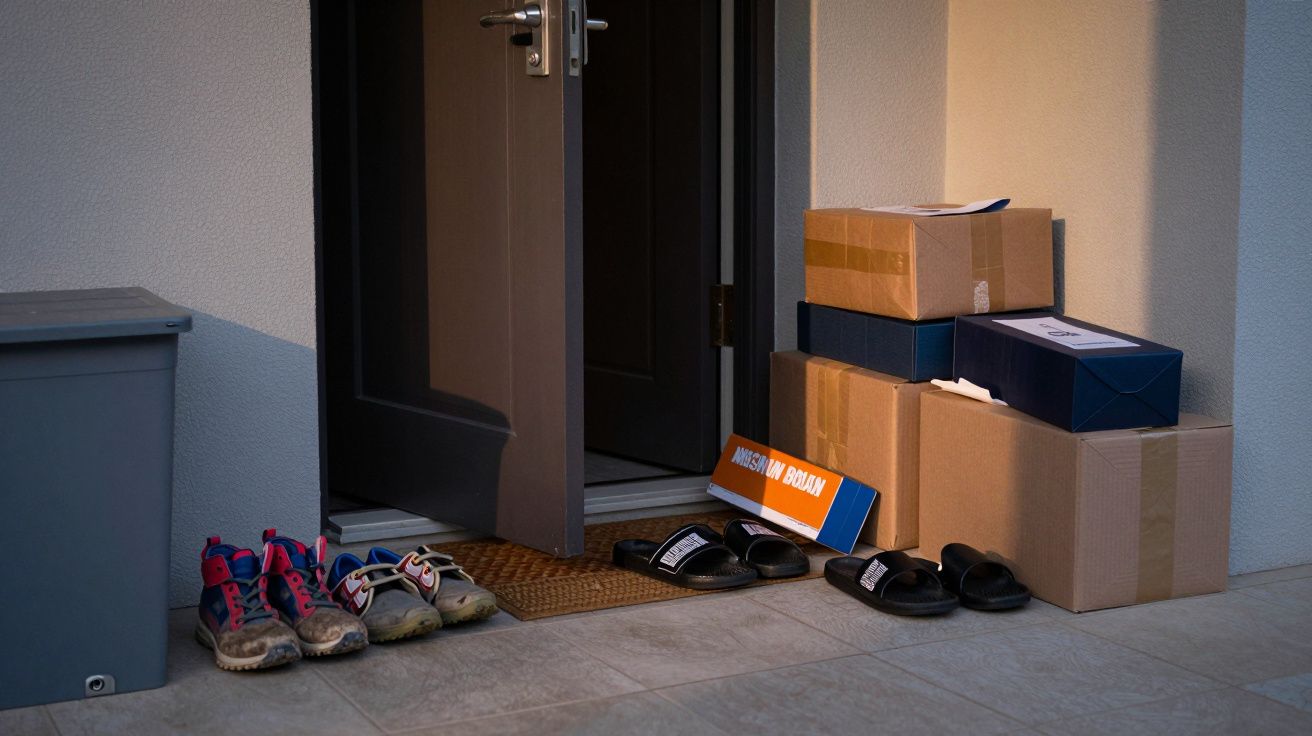
On a wet Thursday, a courier leans into a semi‑detached in Leeds, nudges open the porch and lowers a cardboard box on to the tiles. Around it, the usual clutter: muddy children’s trainers, a pair of designer sliders, last week’s parcel the teenager still hasn’t opened. The inner front door is locked, the family’s at work and school, and the porch feels like a buffer - not quite outside, not fully in.
That evening the box has gone. So have the sliders and two pairs of running shoes. The CCTV shows a hooded figure stepping into the porch, glancing once, then scooping armfuls of stuff and disappearing down the street. It looks like the cleanest kind of burglary to you: caught on camera, losses easily totalling several hundred pounds, a policy that lists “theft from the home” in reassuring bold.
Then the insurer asks a question you weren’t expecting: “Was the porch locked?”
Silence has a cost.
The porch that looks like a shop window
To a thief, an unlocked porch full of parcels and branded trainers is not an awkward in‑between space. It is a display cabinet you have kindly lit and glazed. They do not need crowbars or complex plans. They need ten seconds, a quick grab, and the confidence that nobody thinks of that space as properly “inside”.
To many insurers, that porch is a grey zone too. If it is not locked and integrated into the main alarm system, some policies treat it closer to “outside” than “home”. That matters when you report a burglary. It shapes whether your loss is classed as a covered break‑in, a lower‑value “contents in the open” claim, or an unfortunate gap in cover.
“People think, ‘It’s under cover, that’s safe.’ But if anyone can just walk in, we have to ask: is that really secure?” says one claims handler for a major UK home insurer.
How insurers see your porch, not your intentions
Most home policies ask you to take “reasonable steps” to protect your property. The wording looks gentle. In practice it can bite, especially around doors that are left unlocked “just for deliveries” and porches used as storage.
Handlers look first at two things:
Was there forced entry into the insured part of the home?
If a thief never has to defeat a lock - they simply walk through an unlocked porch door and back out again - some wordings allow the insurer to treat this as “opportunistic theft” rather than burglary, or to decline under sections that require forcible or violent entry.Where exactly were the stolen items?
Trainers, parcels, bikes and prams in an open or unlocked porch may fall under strict “contents in the open” limits, or be excluded altogether unless they are in a locked building. An inner front door makes no difference if the goods never crossed it.
The small print often breaks your property into zones: inside, outbuildings/garages, and the open. A porch that is not locked, alarmed or permanently enclosed can end up on the wrong side of that line, no matter how “indoor” it looks in your mind.
Three quiet traps that can shrink or sink a claim
The patterns that frustrate handlers the most are rarely elaborate. They are simple habits that repeat across streets and postcodes.
1. No lock, no “break‑in”
If your porch door:
- is left unlocked for the courier, or
- has a broken lock you have not repaired, or
- can be popped open without tools,
then a thief stepping inside may not meet the policy’s definition of burglary. Some insurers will still consider the claim under wider “theft” wording, especially if they can see CCTV footage. Others, particularly on cheaper policies, lean on the absence of force.
“We see footage of someone just walking in, like they’ve been invited,” says a handler at a regional mutual. “Customers are genuinely shocked when we explain that ‘unlawful’ and ‘forcible’ aren’t the same thing in insurance language.”
2. Parcels and trainers classed as “in the open”
Even a fully glazed porch can be treated like a front step if:
- the door is routinely left ajar, or
- the structure is temporary, or
- the policy defines “home” as starting at the main, internal door.
In that case, anything stolen there may be capped by a low “contents in the open” limit, often a few hundred pounds in total. Your £180 running shoes and £120 fashion trainers can burn through that in one visit, leaving little or nothing for the missing parcel.
Some policies also exclude property in a porch visible from the street unless the porch is locked. It is the display‑cabinet problem again: if a thief can see it and take it without effort, the insurer may argue the risk is no longer “ordinary”.
3. Delivery instructions that clash with your duties
Many of us:
- tell couriers to “leave in porch if no answer”, or
- give safe‑place photos that show piles of boxes by the inner door, or
- share “new trainers just arrived!” stories online with the porch clearly in shot.
Retailers and carriers may cover loss while the item is in transit, but often consider the job done once a parcel is placed where you requested. Your home insurer then looks at that same porch through the “reasonable care” lens. If you have effectively invited strangers to leave high‑value goods in an unlocked, glass‑fronted space, the handler has to decide whether that is compatible with the policy conditions.
It is an uncomfortable overlap: the convenience we demand from deliveries versus the caution insurers expect as standard.
How handlers talk about porches when the phone is on mute
Off the record, claims teams sound less like villains and more like weary pattern‑spotters.
They talk about:
- the same brand of trainers appearing on footage week after week;
- porches acting as overflow shoe cupboards, with £1,000 of footwear in plain view;
- doorbell camera clips that prove the theft but also show the porch door propped open all day.
“It’s heartbreaking telling someone they are under‑insured or not covered at all, especially after a scare,” says Leanne, a handler with ten years’ experience. “But the policy is a contract. If it says doors should be locked and valuables kept out of sight, that’s what we have to measure against.”
They also note the quiet unfairness: a neighbour with the same layout but a cheap deadbolt on the porch may walk away with a full payout, while the house next door loses out because the key was “never used, to make life easier for drivers”.
Key small‑print pressure points
A few lines in your schedule or booklet do most of the work. They tend to fall into three buckets:
| Risk clue in your porch | What the wording may say | Why it matters at claim time |
|---|---|---|
| Unlocked or flimsy porch door | “All external doors must be kept locked when the home is unattended.” | Insurer may argue there was no forcible entry and that you did not take reasonable care. |
| Visible valuables in porch | “We will not pay for theft of valuables left in the open or visible from outside the home.” | Trainers, prams and parcels on show can fall outside normal burglary cover. |
| Parcels routinely left in porch | “Excludes property in transit or delivered to a safe place at your request.” | Retailer may say it is now your risk; insurer may treat it as unattended property. |
None of this means an insurer will automatically say no. Handlers can and do make judgment calls, especially on comprehensive policies. But those three lines are where they start.
Simple habits that close the gap
You do not need a fortress. You need a porch that looks a little less like a shop front and a little more like part of a locked home.
Lock the porch door whenever you are not in the hall.
Treat it as an external door. Fix weak locks and drooping latches. If you have an alarm, include the porch in the armed area at night and when you are away.Rotate, do not display, high‑value shoes.
Keep expensive trainers and designer footwear further inside the house. Use the porch for boots you do not mind losing, not for collections you would struggle to replace.Tighten delivery instructions.
Avoid “leave in porch” if it is not lockable. Use a secure parcel box, a trusted neighbour, or a local pick‑up point for higher‑value orders. If you must use the porch, get them in quickly.Read the bits of your policy you normally skip.
Look for sections titled Security Conditions, Contents in the Open and Unattended Property. If you are unsure how your porch is classified, ask the insurer in writing.Keep honest evidence.
Photos of locks, alarm stickers and how you normally store items in the porch can help show you took reasonable care. So can doorbell footage that proves the door was locked and forced.
Use the space when you need to. Just do not treat it as a free‑for‑all staging area and then assume the policy will see it as a sealed room.
Leave room for caution as well as convenience
The front porch sits at the point where online life meets your actual doorway. One side holds frictionless deliveries, try‑ons and instant returns. The other side holds the slow logic of underwriting, where risk is priced on what tends to happen when temptation is visible and locks are not.
Clearing a few pairs of shoes, turning a key and changing a delivery note look like tiny gestures. To a handler reading your claim, they are the difference between “we accept this as a burglary at your home” and “we are bound by the conditions you agreed”.
What you leave on show is what thieves, and policies, will notice first.
FAQ:
- If my porch is locked, am I fully covered?
A locked, solid porch integrated into the main structure is more likely to be treated as part of the home, but cover still depends on your exact wording and any security conditions. Always check how your insurer defines “home” and “outbuildings”.- Are parcels in my porch covered by the retailer instead?
Sometimes. Many retailers or couriers cover loss until successful delivery, which can include a safe place you specify. Once a parcel is left where you asked, that cover may end and your home insurance conditions take over.- Do I need to hide every pair of shoes?
No, but insurers expect you not to leave obvious, high‑value items in easy reach of the street. Keeping expensive trainers and gadgets out of sight, and locking the porch, shows you are taking reasonable care.- Will CCTV or a doorbell camera guarantee my claim is paid?
Footage can help prove a theft occurred and how, but it does not override security conditions. If the video shows an unlocked door and valuables on display, it may actually underline why the insurer is applying a limitation.- Can I challenge a refusal linked to porch security?
Yes. You can complain to the insurer, and if you are still unhappy, escalate to the Financial Ombudsman Service. They will look at whether the insurer applied the terms fairly and whether your actions were genuinely unreasonable in the circumstances.



Comments (0)
No comments yet. Be the first to comment!
Leave a Comment